
Course Guide
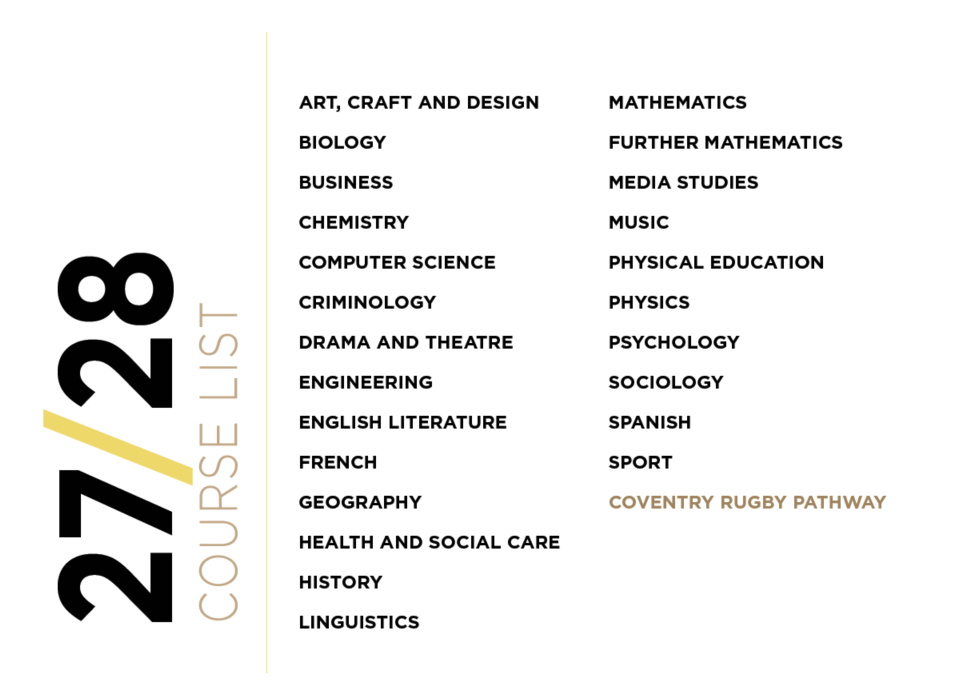
Scroll down to explore our 2027/28 course guide. Click each subject title to learn more about the course, assessment, and subject entry requirements.
Art, Craft and Design
Transforming ideas into masterpieces
The course is designed to be fun, exciting, and thought-provoking. Art, Craft and Design encourages diverse ways of understanding, interpreting, evaluating, and feeling; supporting the development of a sense of individual and collective identity; increased social awareness and engagement and enhanced opportunities for vocational learning and subject-related careers.
Entering the qualification with confident technical drawing and painting ability, and an enquiring mind, tutors support students to research a chosen starting point, using critical understanding to analyse a broad range of contextual sources. Results will inform and justify the application of the visual language of art and design, which will include exploration of alternative materials, techniques, and processes.
During Year 12, students will explore the many disciplines of Art, Craft and Design and be introduced to a broad range of materials, processes, and techniques such as drawing, photography, visual communication, fashion & textiles, 3D Making and printmaking as an introduction to the subject. Students will then have the choice to build on their individual strengths and select their chosen area of study.
Course Title: Art, Craft & Design
Exam Board: AQA
Assessment: Coursework portfolio and an end-of-course examination.
Subject Entry: General Hinckley Sixth Form entry requirements, plus Merit at Art Level 2 or grade 5 in GCSE.
(Please note, all applicants will need to bring a portfolio of work as evidence of their interest and skills to their interview.)

Biology
Exploring life’s secrets through science
A Level Biology focuses on the detailed study of living things in the world around us. Biology students explore controversial scientific issues and examine how science contributes to our economy and our society. Biology combines well with other science subjects, as well as social sciences such as Psychology and Sociology. It is an important qualification for careers in science, including medicine, veterinary science and physiotherapy.
As the knowledge base in biological sciences grows exponentially and technology becomes ever more sophisticated, the ability to think broadly about biology and to apply your knowledge across many areas is a powerful asset both in scientific environments and in many other walks of life.
Our biology alumni have gone on to have amazing careers linked to their A Level, not just as medics and vets, but in the fields of conservation, bioengineering, applied mathematics and many more.
Exam Board: OCR Biology A
Assessment: End of course examinations, and ongoing assessed practicals.
Subject Entry: General Hinckley Sixth Form entry requirements, plus a grade 6/6 in higher-tier Combined Science or a grade 6 in two single science GCSEs (including Biology). GCSE Maths grade 5.
Our scientists have been offered places to study at:
Biomedical Science at the University of Lincoln
Natural Science at the University of Cambridge

Business
Exploring how businesses grow and succeed
The A Level Business course introduces you to all you need to know about the internal and external business environment, providing a solid foundation for further study. With a focus on decision-making, you’ll learn essential leadership skills, alongside techniques to help you become an analytical problem solver capable of reaching clear judgments. These skills are all highly sought after and valued in a wide range of careers.
In Year 12, students will explore the key business functions: marketing, operations, finance and human resource management in the context of real business situations. This includes a specific focus on leadership and decision-making – particularly the interdependent nature of decision-making. In Year 13, students will go on to develop their understanding of strategic decision-making processes undertaken by businesses across the globe. This new A Level course also uncovers how businesses impact society through exploring concepts such as sustainability, CSR and governance.
The course prepares students for university courses such as business, management, accountancy, marketing, economics and law. The skills and knowledge you gain are also transferable across a broad range of subjects and careers. Whatever you choose to do in the future, you’ll find that the things you learn in this course will help.
Exam Board: AQA
Assessment: Three equally weighted 2 hour written exams worth 90 marks each are taken at the end of the two-year course. One paper is standalone and the remaining two are synoptic.
Subject Entry: Minimum of grade 5 in GCSE Business (if taken); grade 5 or above in GCSE English.
Our former Business students have gone on to study:
International Business and Marketing at the University of Leeds
Politics and International Relations at Sheffield Hallam University
Fashion Management at Nottingham Trent University
Accounting with Business Management at De Montfort University
Politics with International Relations at the University of York
Policy, Politics and Economics at the University of Birmingham

Chemistry
Uncovering what shapes our world
A Level Chemistry explores the material world and helps us explain everything from why a cake rises when placed in the oven to how plastics are made. Chemistry is at the forefront of responding to the needs of society, with chemists central to making advances in designing new materials, developing methods for more efficient energy use and discovering drugs, to name but a few.
Some topics within the A Level Chemistry course build on GCSE work, while some are completely new. The A Level Chemistry course includes the following topics:
- Physical Chemistry – kinetics and thermodynamics
- Inorganic Chemistry – the elements and how they react
- Organic Chemistry – carbon and the molecules made from carbon
Sometimes referred to as the ‘central science’, Chemistry combines well with Maths and other science subjects requiring logical thinking skills and problem solving approaches, such as engineering. A Level Chemistry is an essential qualification for anyone aiming to study; medical-related degrees such as medicine, veterinary science, dentistry, pharmacy, chemical industry-related degrees, such as chemistry, chemical engineering and materials science, biotech-related degrees, such as biology and biochemistry and related courses such as forensics and geology. A sound chemical education also promotes powers of analytical thinking valuable to those seeking careers in areas such as law, accountancy, banking and journalism.
Exam Board: AQA
Assessment: End of course examinations, and ongoing assessed practicals.
Subject Entry: General Hinckley Sixth Form entry requirements, plus a grade 6/6 in higher-tier Combined Science or a grade 6 in two single science GCSEs (including Chemistry). GCSE Maths grade 6.

Computer Science
Creating the technology of tomorrow
From artificial intelligence and cybersecurity to app development and robotics, Computer Science is at the heart of some of the world’s fastest-growing industries.
A Level Computer Science develops your problem-solving, analytical and programming skills, teaching you how computers work and how technology is designed, built and secured. Through programming projects and real-world problem-solving, you will learn to think logically, creatively and independently.
Many students join the course with a strong interest in technology and a solid background in Mathematics, developing their programming skills from the start of Year 12.
Computer Science is one of the UK’s most popular university subjects, with leading institutions such as Imperial College London, Oxford, Warwick and Durham offering highly competitive degrees in Computer Science, Artificial Intelligence, Data Science and Cybersecurity. Computing remains one of the most popular degree subjects for UK students, while courses in Artificial Intelligence continue to grow rapidly in demand.
The skills gained are highly valued by employers and can lead to careers in software engineering, cybersecurity, artificial intelligence, data science, game development, and digital technology. Graduates entering technology-related careers often secure starting salaries of £30,000-£40,000+, with significant opportunities for progression and specialist roles commanding substantially higher salaries.
Our Sixth Form students benefit from dedicated computing facilities within the Sixth Form Centre, alongside access to specialist Computer Science teaching rooms across the wider school site.
Exam Board: OCR
Assessment: Two written examinations and a coursework programming project completed in Year 13.
Subject Entry: GCSE Mathematics Grade 6 or above. (You do not need to have studied GCSE Computer Science to be successful at A Level.)
Criminology
Understanding crime, justice, and society
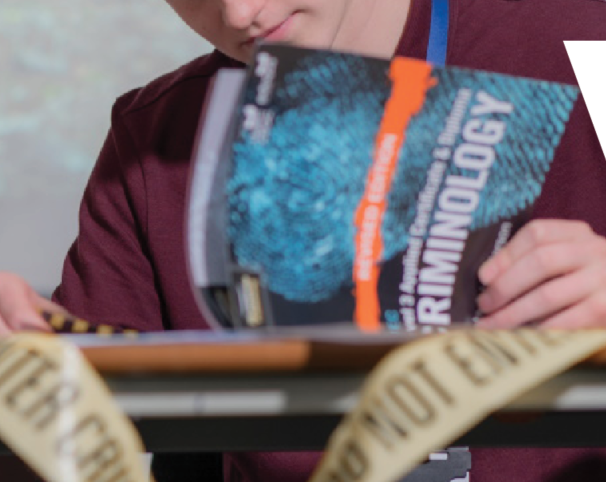
Criminology is the study of criminal behaviour and how it can be explained, controlled and prevented. The course is divided into four units studied over two years:
- Unit 1: Changing Awareness of Crime - Investigating different types of crime and examining how media coverage influences public perceptions.
- Unit 2: Criminological Theories - Exploring key explanations of criminal behaviour, including biological, individualistic and sociological theories, to understand why people may commit crime.
- Unit 3: Crime Scene to Courtroom - Investigate crime scene investigation, forensic evidence, police procedures, and how evidence is used in court.
- Unit 4: Crime and Punishment – An examination of the aims of punishment, the effectiveness of custodial and non-custodial sentences, and the role of agencies involved in achieving social control.
The course is suited to students with enquiring minds, the ability to write a well-structured essay, and a willingness to study and think independently.
Exam Board: WJEC
Assessment: Examination and controlled assessments in Year 12 and Year 13.
Subject Entry: General Hinckley Sixth Form entry requirements, plus grade 5 in GCSE English.
Drama and Theatre
Where bold ideas meet creative expression through the power of theatre
A Level Drama and Theatre is a fantastic
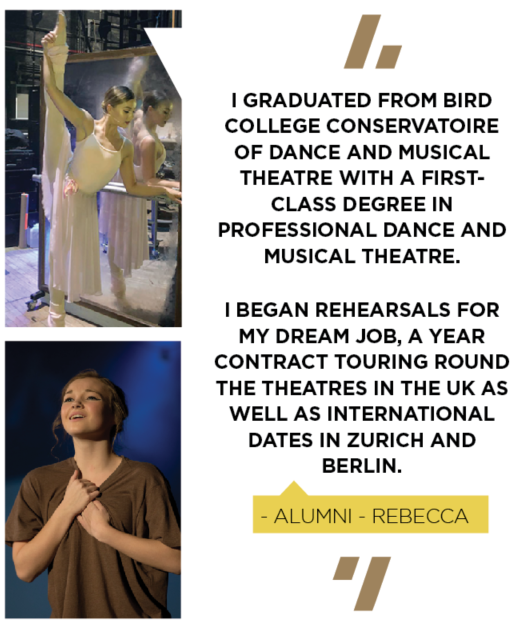
opportunity to develop performance, design, and directorial skills, as well as gain an understanding of the theatre and the theory that underpins staging a play. You will be working collaboratively and practically putting theory into practice as you work towards performance or stage design projects. This course provides a balance of practical performing and reading, analysing, and acting from recognised texts and an appreciation of live theatre.
A Level Drama and Theatre offers an engaging and challenging route for anyone wanting to study performance at university or college, as well as opportunities to develop invaluable skills in communication, collaboration, and confidence for any future career or course of study.
Exam Board: Eduqas
Assessment: End-of-course written examination and school-based practical assessments.
Subject Entry: General Hinckley Sixth Form entry requirements. A GCSE qualification in Drama is preferable, but not essential.
Engineering
Designing innovative solutions for a better future
Engineering is a skills-based course, that will challenge you to design for real-world scenarios and applications and to explore how Engineering impacts our world today. The course is designed to enhance your understanding of engineering practices, applications, and working routines within the industry.
Engineering works well with Science and Maths courses to prepare you for Engineering degrees at university or competitive higher-level apprenticeships. Its blend of theory and project-based learning means Engineering also combines well with other alternative qualifications. Our students benefit from the use of unrivalled facilities, including computer suites, laser cutter,
woodwork, and metalwork machinery.
Our students have gone on to study Engineering across the country and take up exciting apprenticeship opportunities in vehicle, mechanical, and machine engineering, as well as in robotics and design.
Exam Board: Pearson
Assessment: A mix of exams and coursework.
Subject Entry: General Hinckley Sixth Form entry
requirements, plus a grade 6 in a Science subject and grade 6 in GCSE Maths.
THE FUTURE STARTS WITH US
Our former Engineering students have gone on to study:
Construction Project Management at the
University of Plymouth
Automotive Engineering at Loughborough
University
Aeronautical Engineering at Loughborough
University
And secure impressive higher apprenticeship
destinations such as:
Prototype Apprenticeship at MIRA
Apprenticeship at Arrow Precision Engineering
Electrical Engineering Apprenticeship at JCB
Where will studying Engineering at The Hinckley Sixth Form take you?
Linguistics (English Language)
Understand how language evolves
A Level Linguistics takes you on a journey through language, from learning how we learn to communicate in infancy, to exploring how we use language as adults. You’ll discover how factors such as gender and age impact our language choices, and study how we speak and write in a wide variety of contexts.
Language is constantly evolving, and you will learn how English has developed from the earliest forms of writing, through the Medieval and Early Modern periods, to the words and phrases we use today. We will explore how language is used in online forms of communication, looking at examples from diverse sources including social media, text messages, and email exchanges. You will become confident at analysing all the finer details of written and spoken texts and have a deeper understanding of how writers and editors use language to communicate.
English Language provides skills for any career that involves written communication and a confident grasp of the English language.
Successful linguists can enjoy a range of career opportunities in areas including the arts, the education sector, the media industry, law, politics – anything that requires fluent and confident communicators.
Exam Board: Eduqas
Assessment: End-of-course examinations and an independent coursework investigation.
Subject Entry: General Hinckley Sixth Form entry requirements, plus grade 5 in GCSE English Language AND Literature.

English Literature
Discovering worlds through words and imagination
If you love reading, discussing, and analysing a range of literary texts, A Level English Literature is for you. You’ll be taken on a literary journey through history, examining writing from the Middle Ages to the Elizabethan period, from a Victorian novel to texts written in the 21st century.
The course covers everything from short poems to long narrative verse, Early Modern Drama to American plays, Modernist fiction and unseen poetry, as well as the fathers of English Literature: Chaucer and Shakespeare. You’ll explore connections across these literary works, examining the contexts in which they were written and responding critically and creatively to their themes and ideas. Essay writing is a core skill, and you will learn how to craft an academic essay that draws on a range of interpretations of each text. A ‘facilitating’ subject, favoured by universities for a range of degree courses, English Literature is an important choice for careers in journalism, teaching, public relations, media, politics, publishing, law, and more.
Exam Board: Eduqas
Assessment: End of course examinations and one coursework task.
Subject Entry: General Hinckley Sixth Form entry requirements, plus grade 5 in GCSE English Language AND Literature.
French
Découvrez la culture du monde francophone à travers sa langue
A Level French will extend your understanding of French vocabulary and grammar, developing your ability to speak fluently. The course is based around a wide range of topical issues, revolving around culture in French-speaking countries, as well as the language.
French combines well with any other Sixth Form courses and opens the door for studying and working abroad in any industry. Studying a language is always a positive choice; it adds value to your other qualifications and gives you a real advantage in the world of work. You’ll foster a range of transferable skills, including communication, critical thinking, research skills, and creativity - valuable to you and future employers.
Studying a language not only broadens your career prospects, it also opens doors to new cultures, exploration, and adventure.
Exam Board: Edexcel
Assessment: Listening, speaking and written exams.
Subject Entry: Grade 6 or above in GCSE French.
Geography
While studying A Level Geography you will have the opportunity to study three physical units (Carbon and Water Cycle, Hazards and Deserts) and three human units (Changing Places, Globalisation and Global Governance and Population). Not only will each unit allow you to explore the ever changing world, but connections between the different units allow you to develop a holistic understanding of Geography.
The physical units, making up 40% of the overall grade, provide an insight into the natural world. With the current focus on changes to global climates, the study of the Carbon and Water Cycle provides an understanding of why this occurs, with a strong focus on river and rainforest environments. As part of the Hazard unit, we analyse the impacts of natural events, understanding what causes various tectonic and weather hazards and why impacts vary between developing and developed countries. The Desert unit allows students to understand how deserts develop and how they are impacting on life in various countries globally.
The human units, making up 40% of the overall grade, allow students to understand how we are impacting the planet. Urban areas are consistently changing and creating different challenges for different cultures and societies. Changing Places provides students with an insight into what is changing in urban areas and why, using local, national and international examples. Changing environments and political challenges in the developed and developing world mean our world needs to be governed to the best of our ability. Globalisation and Global Governance allows students to understand what caused our world to be interconnected, how our planet is governed and what areas are most at risk. The Population unit focuses on how the world is changing regarding its demographics and what factors are influencing population structures around the world.
Coursework makes up 20% of the overall grade, giving students an opportunity to explore an environment in the UK and create their own investigation, providing an insight into one of the six units in more detail. Geography at The Hinckley Sixth Form provides students with the opportunity to be independent thinkers and inspires those interested in how the world works, to focus on what is required to make our planet sustainable and to discuss issues and
challenge problems facing our planet.
Assessment: End of course examinations, including multiple choice and written answers, and coursework.
Subject Entry: General entry requirements, plus 5 in Geography or another Humanities subject preferred.
Health and Social Care
Care, Compassion and Knowledge
Health and Social Care is an Alternative Academic Qualification that relates to all aspects of health and social care in the UK. The programme prepares you to pursue a career in healthcare, social care, childcare, or education, giving you knowledge, understanding, and skills to prepare for employment or further study.
The qualification incorporates topics relevant across the health and social care sector:
• Unit 1: Human Lifespan Development
• Unit 2: Human Biology
• Unit 3: Health and Social Care Practice
• Unit 5: Promoting Health Education
Health and Social Care explores similar themes to social science subjects such as Psychology and Sociology, but with a vocational focus. After this qualification, students can progress directly into employment or onto higher study.
Exam Board: Pearson
Assessment: Coursework and examinations in both Year 12 and Year 13.
Subject Entry: General entry requirements.
“I am passionate about my Health and Social Care lessons as they are always different and interesting. I have learnt about a range of professionals and organisations and how they support people in our community. I have also gained a range of skills, including research, organisation and time management that will be useful in the future.”
- Student Quote
History
Learn lessons from the past to shape tomorrow
A Level History is an interesting and challenging subject that analyses change and continuity in human societies, helping students to develop an enquiring and analytical mind. During the course students’ study two units and produce a historical investigation into the factors that developed the Witch Craze in Britain.
‘Tsarist and Communist Russia, 1855-1964’ is our breadth study. This topic explores how Russia changed from a traditional tsarist empire into a communist superpower. It examines the political, economic, and social developments that shaped modern Russia. The unit will dive into the Tsars attempts to reform and preserve autocratic rule, the growing opposition that led to the 1917 Revolutions and the establishment of the Soviet Union under Lenin. The course then follows the rise of Stalin, whose policies of industrialisation, collectivisation, and political repression transformed Soviet society, before examining Khrushchev’s efforts to reform the USSR after Stalin’s death.
‘The Making of Modern Britain, 1951-2007’ is our depth study. This topic explores the political, economic, and social transformation of Britain from the post-war era to the early 21st Century. It examines how Britain adapted to changing social attitudes, economic challenges and shifts in global influence. The study of key prime ministers, including Churchill, Macmillan, Wilson, Thatcher, Major and Blair will allow students to investigate post-war prosperity, economic decline and recovery, industrial disputes, the relationship with Europe, the growth of multiculturalism and constitutional reform.
Former Hinckley Sixth Form students have gone on to further study in areas such as History, Politics, and Law, including at Oxbridge Universities. The ability to communicate effectively both orally and in writing, is developed throughout the course and is useful for all further study routes and careers.
Exam Board: AQA
Assessment: End-of-course written examinations and a coursework essay.
Subject Entry: General Hinckley Sixth Form entry requirements, plus grade 5 in GCSE History, and grade 5 or above in English.
Mathematics
Skills for a fast-paced world
Mathematics is a challenging and exciting course covering topics in pure mathematics, mechanics, and statistics.
You’ll use and apply advanced mathematical techniques, learn to reason, interpret, and communicate ideas mathematically, and also develop skills in solving increasingly complex mathematical problems.
To fit a swiftly developing and fast-paced world, the course emphasises the use of IT and software to help solve problems.
Students will develop analytical skills, logic, and add in a bit of creativity, giving them a set of skills which make them desirable for any job or university course. Many of our Mathematics students also study Further Mathematics as a fourth course option, further enhancing their
knowledge and setting them apart from similar applicants when looking at future destinations and maths-related careers.
Exam Board: AQA
Assessment: End-of-course examinations.
Subject Entry: General Hinckley Sixth Form entry requirements, plus grade 7 or above in GCSE Mathematics is advised.
Further Mathematics
Explore the frontiers of mathematical thinking
Further Mathematics is an extension of the A Level Mathematics course, which can only be studied by those already doing A Level Mathematics. It is a challenging qualification, which extends and deepens your knowledge and understanding in the areas of mechanics, pure, and discrete mathematics.
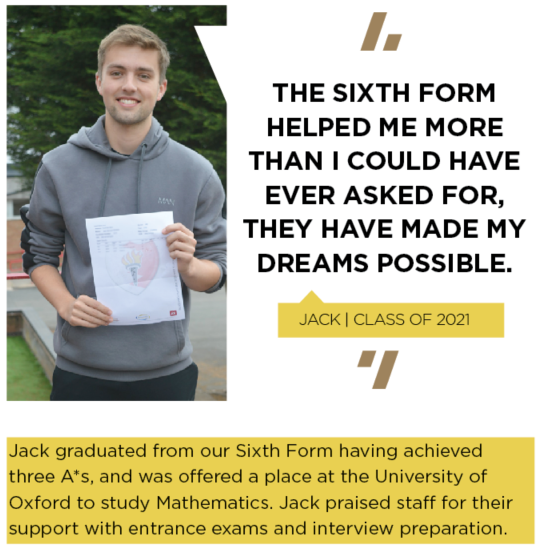
The Hinckley Sixth Form has a strong reputation for supporting students to go on to study Maths at leading universities across the country, including numerous students who have accepted places to study at the University of Oxford.
Further Mathematics is offered as both a one-year AS and a two-year A Level. This course is recommended as a fourth A Level choice.
Exam Board: AQA
Assessment: Three exams at the end of Year 13 for A Level, or two at the end of Year 12 for AS.
Subject Entry: Grade 8 or above in GCSE Mathematics.

Media Studies
Explore the ever-evolving global media landscape
How are groups of people represented to us in the media? Is it morally right to make a film out of tragic events? Can the media be blamed for violence in society? How far does the media control our thoughts about issues in the world today? This two-year course explores how media represents different groups, influences public opinion, and responds to global issues. Students examine both contemporary and historical media texts from the UK and beyond, including independent and non-mainstream productions.
Key topics include:
- Representation of people and events
- Ethical questions in media (e.g. portraying tragedy)
- Media’s role in societal violence and shaping thought
Students will analyse a wide range of media industries and texts, study media theory and
alternative, and historical texts. During the course, students will develop critical thinking, research, and essay writing, practical skills in publishing, film-making, and editing, teamwork and personal reflection through discussions and coursework.
Career paths after studying Media Studies can include journalism, PR, marketing, publishing, and media development.
Exam Board: Eduqas
Assessment: A mixture of coursework tasks (30%) and examinations (70%).
Subject Entry: General Hinckley Sixth Form entry requirements, including grade 5 or
above at GCSE English.
Music
Music is a practical, creative and academic course which allows you the freedom to steer your own direction of learning whilst studying musical conventions, performances and the music industry. This course has breadth and depth, developing your skills as a performer, composer and musician.
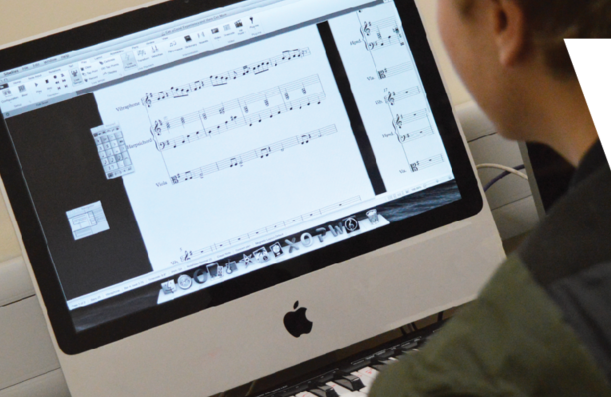
Practical tasks include solo and ensemble contexts, developing your skills in rehearsing to prepare for a big performance. Composition tasks can be completed on the iMacs using Sibelius 7 or Logic Pro, integrating technological skills. The academic tasks require you to research, analyse and evaluate your own work and specific musical concepts. These can be assessed as articles, interviews or presentations.
Music is an essential qualification for acceptance to a specialist performance programme at a music school or college or for anyone who wishes to pursue music as a career or a hobby.
Assessment:
- Unit 6: Solo performance
- Unit 3: Ensemble performance
- Unit 1: Notation, theory and harmony
- Unit 2: Professional practice in the music industry
Within the two years, there will be a combination of articles, diaries, and written responses in exam conditions as well as recordings of performances, practice sessions, presentations, interviews, tutorials, and compositions.
Subject Entry: GCSE Music grade 4 pass or above and a keenness to perform on your instrument/vocals.
Physical Education
Unlock your potential
Through the Physical Education course, you will develop knowledge of both physiological and psychological theories within sport, as well as learning about the impact of sport on current and historical societal issues. You will study a range of topics, including the causes and treatment of sports injuries, how personality and anxiety affect performance, and how modern technology has impacted on 21st-century sport.
The A Level PE course is a progression from GCSE PE, with topics explored in more detail as you progress into Level 3 study. The course features three exams, and therefore course content can be defined into three distinct sections: Exercise Physiology - including the muscular, cardiovascular, and respiratory systems, energy systems the body uses, and exercise at altitude / Psychology - including theories of leadership, personality, and the impact of anxiety on athletes / Social & Cultural - Including the history of sport through to modern day, role of women in sport, media, and commercialisation and global events.
Our students progress on to study Sports and Exercise Science, Sport Business Management, Sports Massage and Remedial Therapy, and Strength and Conditioning.
Exam Board: OCR
Assessment: One practical area of sport, including a verbal analysis and evaluation of performance, and a mixture of short-answer and essay-style exam questions in two end-of-course examinations.
Subject Entry: General Hinckley Sixth Form entry requirements, plus grade 5 or above in the GCSE PE theory paper or grade 5 in a GCSE Science. Students must play a sport outside of school.
Physics
Discover the forces that shape our universe
A Level Physics enhances your understanding of the universe. It is a challenging, but inspiring course, ranging from the Newtonian concepts that govern the macroscopic world, down to the laws of Einstein that govern the microscopic.
You will further your knowledge in the topics of Kinematics, Electricity, Radioactivity, Simple Harmonic Motion, and Cosmology. Physics at A Level will provide you with the opportunity to link your mathematics knowledge directly to Physics concepts as evidence for their existence.
During your Physics lessons, you will be encouraged to ‘think like a physicist’. This will involve designing and carrying out practicals in a professional manner to gather data. We will then ask you to critically analyse this data and use current theory to formulate conclusions. The many skills that you will develop in your Physics lessons - such as problem-solving, critical thinking,
numerical, and communication—are transferable to a wide range of careers.
Studying Physics strengthens quantitative reasoning and problem solving skills that are valuable in careers in Physics and all other industries. Our alumni have gone on to further study in fields such as: Astrophysics, Architecture, Aeronautical Engineering, Veterinary Science, and even Town Planning.
You will undertake tasks in lessons individually and in groups, where you are encouraged to work with your peers to discuss and challenge ideas. During the course, you have the opportunity to research a specific area of Physics you are most interested in, and write a report demonstrating your understanding of the Physics concepts that underpin it.
Exam Board: OCR
Assessment: End-of-course examinations and ongoing practical assessments
Subject Entry: General Hinckley Sixth Form entry requirements, plus grade 6 in GCSE Maths. Minimum of 6/6 in Combined Science or grade 6 in two single science GCSEs, including Physics.
Psychology
Understand minds, explore behaviour
Ever wondered if prison really does change criminal behaviour? Or why some people conform? Or perhaps if the experiences you had before the age of five really do shape the person you are today? Well, Psychology is the scientific study of the human mind and behaviour, and that are questions we study. A Level Psychology aims to explore these questions through many different paradigms: biological, social, psychodynamic, evolutionary, cognitive, behavioural, and humanistic.
You’ll tackle thought-provoking topics such as memory, social influence, schizophrenia, and forensic psychology. You will study a range of interesting research studies and consider the ethical issues involved in these. You will learn how to carry out a scientific research project, interpret statistics, and write a report. Studying Psychology at university can give you a whole host of exciting career options, including marketing, business development, accountancy, human resources, forensic psychology, occupational therapy, clinical psychology, nursing, and teaching.
Course Modules:
- Attachment
- Memory
- Social Influence
- Psychopathology
- Research Methods
- Approaches
- Sxhizophrenia
- Forensic Psychology
- Issues and Debate
- Gender
Exam Board: AQA
Assessment: End-of-course examinations.
Subject Entry: General Hinckley Sixth Form entry requirements, including grade 5 in GCSE English and Maths. A higher pass grade in English is an advantage.
Sociology
Explore society, understand change
Ever wondered why some people succeed more than others, why crime happens, why people turn to religion or how social media shapes our identity? Sociology helps you understand the world around you and the forces that influence our lives. A Level Sociology involves studying human social life, groups, and societies in a systematic way. Sociologists investigate and attempt to explain the social world and our behaviour in it.
The modules students will study include:
• Education,
• Culture and Identity,
• Theory and Methods,
• Crime and Deviance,
• Beliefs in Society
A-Level Sociology develops critical thinking, analysis and essay-writing skills that are highly valued by universities and employers.
Exam Board: AQA
Assessment: End-of-course examinations.
Subject Entry: General Hinckley Sixth Form entry requirements, including grade 5 in GCSE English.
Spanish
Descubre el mundo hispanohablante a través de su lengua y su cultura
A Level Spanish will deepen your knowledge of Spanish vocabulary and grammar while developing your confidence as a fluent and independent communicator. The course explores a wide range of contemporary topics, alongside the rich culture, history, society, and traditions of Spanish-speaking countries around the world.
Spanish complements any Sixth Form study programme and is highly valued by universities and employers alike. As one of the most widely spoken languages in the world, Spanish opens up opportunities for travel, study, and careers across a huge range of industries, both in the UK and internationally. Whether your ambitions lie in business, law, medicine, education, engineering, tourism, or international relations, a language qualification can help you stand out from the crowd.
You will develop a range of transferable skills including communication, problem-solving, critical thinking, research, analysis, and cultural awareness. These skills are highly sought after and will support your success in higher education and the workplace.
Studying Spanish is more than learning a language; it is gaining the skills, confidence, and global outlook to thrive in an increasingly connected world.
Assessment: Listening, speaking and written exams
Exam Board: AQA
Subject Entry: Grade 6 or above in GCSE Spanish.
BTEC Sport
Giving athletes the platform for success
This course forms part of our Elite Sporting Pathway and has been introduced to allow our wealth of local athletes the benefit of being taught by subject experts in an environment with a strong sporting legacy and commitment to excellence.
COURSE PATHWAYS
At The Hinckley Sixth Form, the BTEC Level 3 National Diploma in Sport can be studied in two ways:
Extended Diploma
This is equivalent to studying 3 A Levels, allowing students to solely focus on participation in our Elite Sporting Pathway. Students on this pathway will not study any additional Level 3 courses alongside their BTEC Level 3 National Diploma.
or
Double Award
The double award is best suited to students who would like to combine their passion for sport alongside broadening their knowledge with a supplementary Level 3 course.
This course is equivalent to 2 A Levels, and is a blended offer allowing students to study one further Level 3 qualification, such as one of our A Level subjects.
Due to its foundation of heavily practical units, BTEC Level 3 National Diploma in Sport is well suited to learners who are passionate about excelling in practical sport as part of their studies, alongside written elements. The course is open to students from any sporting background, including netball, football, basketball, and rugby.
COURSE CONTENT
During this course you will undertake mandatory units, and some optional units which will be based around practical activity which will allow you
to choose a specific specialist area in which
you wish to develop, or continue on a broad programme.
Topics you will study on this course include:
• Anatomy and Physiology
• Fitness Training and Programming for Health, Sport and Well-being (practical and written)
• Professional Development in the Sports Industry
• Sports Leadership (practical and written)
• Investigating Business in the Sport and Active Leisure Industry
• Skill Acquisition in Sport
• Coaching for Performance (practical and written
• Sport Event Organisation
WIDER OPPORTUNITIES
Students interested in joining the rugby pathway should indicate their interest on their application form. Student studying BTEC Level 3 National Diploma in Sport will also have the opportunity to visit Loughborough University, to experience a day in one of the UK’s leading higher education institutions. Students are given the opportunity to view elite sporting facilities, and gain an insight into university life and what it means to be a university student.
TRANSFERABLE SKILLS
This course will allow you to practice developing important employability skills such as:
• Cognitive and Problem-Solving Skills: critical thinking, applying expert and creative solutions to problems, use systems and technology
• Intrapersonal Skills: self-management, adaptability and resilience, self-monitoring and development
• Interpersonal Skills: communicating, working collaboratively, negotiating and influencing, self-presentation
PROGRESSION OPPORTUNITIES
As well as supporting students who aspire to build careers as professional athletes, after successfully completing the BTEC sport course, students will be able to progress on to higher education on full degree single or combined courses, for example:
• BA (Hons) in Sports Development and Management
• BSc (Hons) in Sports Management / Coaching
• BSc (Hons) Sports Business Management
• BSc (Hons) Sport and Leisure Management
• BSc (Hons) Sports Science (Outdoor Activities)
• BSc (Hons) in Exercise, Health and Fitness
Exam Board: Pearson
Assessment:
Extended Diploma: Four externally accessed exams over the two years and around 70% internally assessed coursework.
Double Award: Three externally accessed exams over the two years and around 70% internally assessed coursework.
Subject Entry: General Hinckley Sixth Form entry requirements of five GCSE passes at grades 5 to 9, including English and Maths. Students who do not meet entry requirements on Results Day will be invited to attend our Clearing Clinic, as they may still be suitable to study the BTEC National Diploma.
When applying to study the Extended Diploma here at The Hinckley Sixth Form, please do not select any other courses on your online application form.
When applying for the Double Award here at The Hinckley Sixth Form, please select one additional course to study alongside your BTEC National Diploma in Sport.
Rugby Pathway - Coventry Rugby
Combine academic adventure with elite opportunity
All our students have the opportunity to combine academic study with an elite rugby programme by becoming part of our Rugby Pathway, in partnership with Coventry Rugby. Students on this pathway will have fixtures and expert coaching built into their timetable, alongside their chosen A Level and Vocational courses - offering students exceptional opportunities both on and off the pitch.
The pathway also provides players, who meet required standards, with a clear progression route into Coventry Rugby’s U18s programme.

Students interested in joining the rugby pathway should indicate this on their application form.
(Please note that all information was correct at the time of publishing. The Hinckley Sixth Form reserves the right amend the course offer or to close courses where low levels of interest mean the course is not viable.)
